Showing posts with label Wisdom. Show all posts

Friday, July 29, 2016

Presidential Parenting

Helpful, Not Hurtful, Leadership


There is little room for complacency in raising a child just as in running a country.

Complacent: marked by self-satisfaction especially when accompanied by unawareness of actual dangers or deficiencies.


All types of babies are born into our world—this is a green heron—thanks, Joe!


Just as a president is the leader of a nation helping to guide its citizens, parents are the most important role models to their children helping to raise them up, hopefully, into caring citizens of the world. But, often the leadership is uninformed—the caregiver shortsighted. This can be more hurtful than helpful. As citizens of a country, just as parents of a newly born baby, we should make every effort to become better informed as we move forward into the future. I sure hope to. 


Tuesday, May 31, 2016

The Natural World Of Winnie-the-Pooh


Nowhere, Just Out Playing


A serendipitous meeting of two thoughtful literary texts occured this week for me. Such was the case when I attended a book reading at Village Books, our wonderful local independent bookstore. Then, days after, I listened to an eloquent poetry reading by my lovely friend, Linda Conroy. They both touched my inner child.


The author at Village Books was Kathryn Aalto and I listened with some interest as she spoke about her New York Times bestseller hardcover, The Natural World Of Winnie-the Pooh. Aalto has master’s degrees in garden history and creative nonfiction with a particular interest in literary landscapes. Much of the book is devoted to the flora and fauna of Ashdown forest and the Hundred Acre Wood—the pristine natural setting of the most popular children’s book in history. I was about to escape out the back of the presentation when Ms. Aalto said, “In closing, I’d like to read a bit from my introduction.” What she recited spellbound me…

“Since Winnie-the-Pooh and The House at Pooh Corner were published in 1926 and 1928, they have taken on greater meaning. We value the books for simple expressions of empathy, friendship, and kindness. The stories are classics as they express enduring values and open our hearts and minds to help us live well. But as I read about Milne and walked around England with my children, I saw how they tell another story: the degree to which the nature of childhood has changed in the ninety years since Milne wrote the stories. There is less freedom to let children roam and explore their natural and urban environments. There are more digital distractions for our children that keep them indoors and immobile, and heightened parental fears that do so as well.
At a time when there is so much talk about nature-deficit disorder, rising childhood obesity levels, reduced school recess, and overprotected childhoods, these stories and illustrations remind us of the joy in letting our children explore the natural world and the importance of imaginative play away from the eyes of parents. The real and imagined places of the Hundred Acre Woods are tender touchstones for the precious time of childhood. Milne’s books remind us that aimless wandering and doing Nothing is actually a very big Something for little ones.”

Saturday, April 30, 2016

Free Range Learning (entire review)


Free Range Learning

How Homeschooling Changes Everything

Introduction

Laura Grace Weldon’s Free Range Learning combines insightful wisdom, tender compassion, and vibrant understanding in helping the reader see the potential in meaningful, real-life learning—growing up in a respectful, engaged, and joyful family. Her handbook transforms boundaries—or does away with them altogether. She is a kindred spirit.

I would like to share my favorite bits of Free Range Learning—with mostly direct quotes. Apologies for the many salient points that I leave out within the 275 pages of this inspirational ‘go-to’ reference book.


The Wisdom of Laura Grace Weldon 

(tasty morsels of her unique thinking)

Education as Life, for Life

ü  The child’s wondrous progress from helpless newborn to a remarkably sophisticated five-year old happens without explicit teaching. In fact, most of a child’s learning is so continual that it goes unnoticed.
Ø  Toddlers experiment like enthralled scientists. They rapidly develop a grasp of everyday physics.
Ø  They master nuances of social interaction long before they can speak in sentences.
Ø  Their comprehension expands much more quickly than their growing vocabulary. Often, children seem to ignore what they aren’t ready to learn, only to return to the same skill or concept later with ease.
Ø  What they do is intrinsically tied to why they do it, making the learning process purposeful. They are confidently in charge of their own instruction.
Ø  They require little fanfare for their achievements, as mastery gives them more than enough satisfaction.

Wednesday, April 27, 2016

Free Range Learning (1 of 3)


Free Range Learning 

How Homeschooling Changes Everything

Introduction

Thanks, Laura!
Laura Grace Weldon’s Free Range Learning combines insightful wisdom, tender compassion, and vibrant understanding in helping the reader see the potential in meaningful, real-life learning. What it means to grow up and parent in a respectful, engaged, and joyful family. Her handbook transforms boundaries—or does away with them altogether. She is a kindred spirit.

I would like to share my favorite bits of Free Range Learning—with mostly direct quotes. Apologies for the many salient points that I leave out within the 275 pages of this inspirational ‘go-to’ reference
book.

Due to the extensive material I wanted to include, I will split this post into three separate posts. This is part one of three. Parts two and three will follow on consecutive days, with a fourth post containing all three parts in one. 


The Wisdom of Laura Grace Weldon (tasty morsels of her unique thinking)

Education as Life, for Life

ü  The child’s wondrous progress from helpless newborn to a remarkably sophisticated five-year old happens without explicit teaching. In fact, most of a child’s learning is so continual that it goes unnoticed.
Ø  Toddlers experiment like enthralled scientists. They rapidly develop a grasp of everyday physics.
Ø  They master nuances of social interaction long before they can speak in sentences.
Ø  Their comprehension expands much more quickly than their growing vocabulary. Often, children seem to ignore what they aren’t ready to learn, only to return to the same skill or concept later with ease.
Ø  What they do is intrinsically tied to why they do it, making the learning process purposeful. They are confidently in charge of their own instruction.
Ø  They require little fanfare for their achievements, as mastery gives them more than enough satisfaction.

ü  Experiential learning, along with the guidance of parents and other elders, is precisely the education known throughout the majority of human history. Schooling is the experiment.

Tuesday, December 29, 2015

Developing Young Minds From Conception to Kindergarten


Conception–K Schooling: Rich Rewards and Returns


Parenting
My schooling begins at birth, people!
Huge sums of federal and foundation funds have been injected into the education system—school reform efforts— over the last half-century in an attempt to bridge the learning gap. No silver bullet has surfaced. How can so much hard work, so much money, and the best intentions fail to produce some kind of “best practices” that work for educating our children?

Perhaps the critical question is not “How do children learn best” but “When do children learn best?” 


Sunday, September 20, 2015

Youth Library Cards


Common Sense is the New Wisdom 

Hop on down to the local library
with toddler in tow
Scoot on over to the librarian
with toddler on toe
Order a library card in toddler's name
Then dance and hoot 
until you get the boot!

PGB

early learning
Papa, please put my library card on our refrigerator with a really good magnet

It came as rather a surprise when I read an article in The University of Washington's Columns magazine about "The New Mindset, Turning Research Into Better Living." The first example of UW's "innovation imperative" was a nursing professor who "discovered" that premature babies gained weight and developed faster if they were rocked and could hear the sound of a heartbeat.

Tuesday, September 1, 2015

Hands Free Life

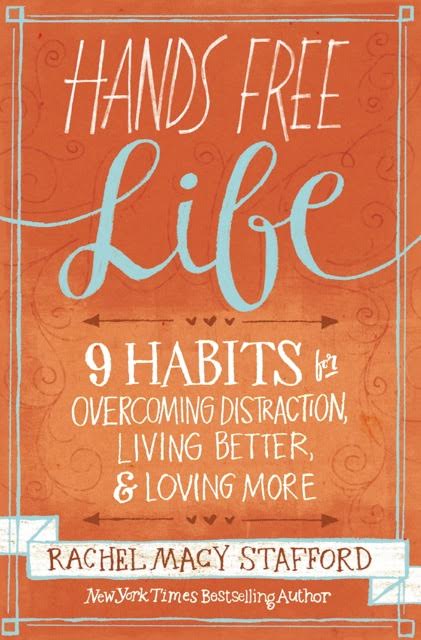
After reading Hands Free Life: 9 Habits for overcoming Distraction, Living Better, and Loving More by Rachel Macy Stafford, I began to understand myself better. Her poetic, philosophical, spiritual, and above all, inspirational writing reminds me of Kahil Gibran's masterpiece, The Prophet. But Stafford is also a contemporary Maria Montessori. Perhaps, a beautiful blend of the two.

Overcoming distraction, inspirational
Compassion is contagious!

Tuesday, May 26, 2015

Finding Awe In Children

The Fear in Awe

When we become parents for the first time we experince awe in all its glory. The reverence of something greater than ourselves. The admiration of a living miracle. Also, the fear about everything connected to becoming a parent... fear that we won't know how to handle the baby, fear that we aren't